16 Bullet Journal Monthly Page Spread
A well-structured Bullet Journal monthly section contains more than just a calendar. Each page serves a purpose—planning, tracking, reflecting, or creating. Below are 16 page ideas that together create a comprehensive monthly system. Mix and match these pages to build a monthly section that perfectly fits your needs.
1. The Cover Page
The cover page is your monthly entry point—a visual introduction that sets the tone for the month ahead. It marks the transition from one month to the next and gives you a moment of creative expression before diving into planning.
Design a cover page that reflects the month’s mood, season, or theme. Include the month name prominently, along with decorative elements like floral wreaths, geometric patterns, seasonal illustrations, or inspirational quotes. Some journalers include a small calendar or a “word of the month” on their cover page.
QUICK TIPS
- Keep it simple if you’re short on time—even a beautifully written month name is enough.
- Use the cover page to practice a new lettering or art technique.
- Make it personal—your cover page should reflect what this month means to you.

2. The Monthly Calendar Grid
The monthly calendar grid is the backbone of your monthly section. It provides a high-level view of appointments, deadlines, and events at a glance.
Draw a simple grid with the days of the week across the top and dates down the side. Fill in the boxes with birthdays, meetings, appointments, deadlines, travel, and other important dates. Keep it clean—this page is for scanning quickly, not for detailed notes.
QUICK TIPS
- Use different colored pens for different types of events.
- Add a small notes section at the bottom for things that don’t fit in the grid.
- Review this page weekly to stay aware of upcoming commitments.

3. The Goals Page
A dedicated goals page transforms your monthly planning from reactive to intentional. It defines what you want to accomplish in the next 30 days.
Divide your goals into categories: Personal Growth, Career, Health & Fitness, Relationships, Finances, and Home. Under each category, write 2–3 specific, measurable goals. Leave space to track progress throughout the month.
QUICK TIPS
- Use the SMART framework for goal setting.
- Limit total monthly goals to 10–12 to avoid overwhelm.
- Review your goals weekly to stay on track.

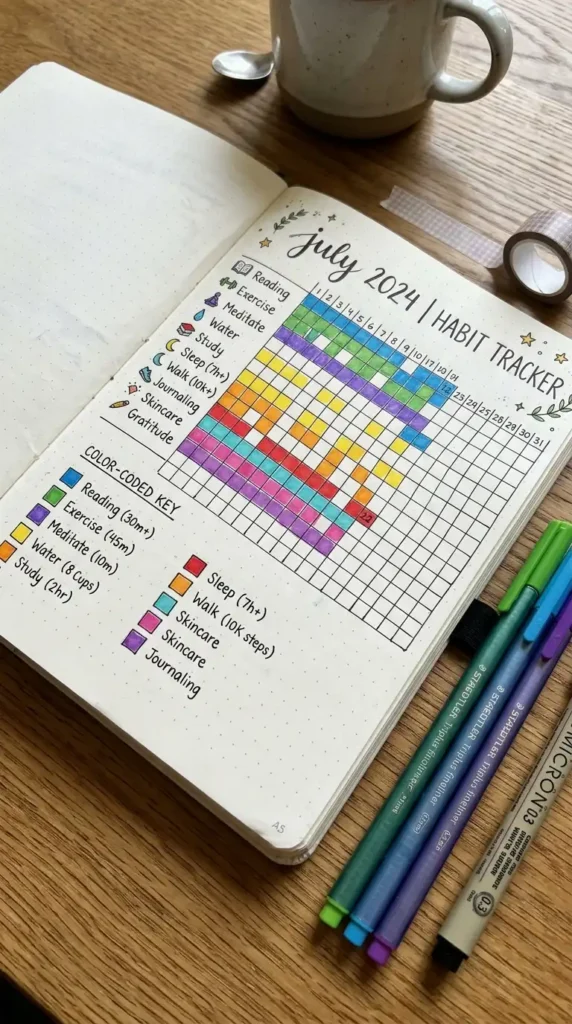
4. The Habit Tracker Page
Habits are the building blocks of a productive life. A dedicated habit tracker page helps you monitor daily behaviors that support your larger goals.
Create a grid with the days of the month across the top and your habits down the side. Each day, mark whether you completed each habit. Review your tracker weekly to identify patterns and adjust as needed.
QUICK TIPS
- Start with 5–7 habits—any more becomes overwhelming.
- Use a color-coding system for easy scanning.
- Pair your habit tracker with a weekly reflection.
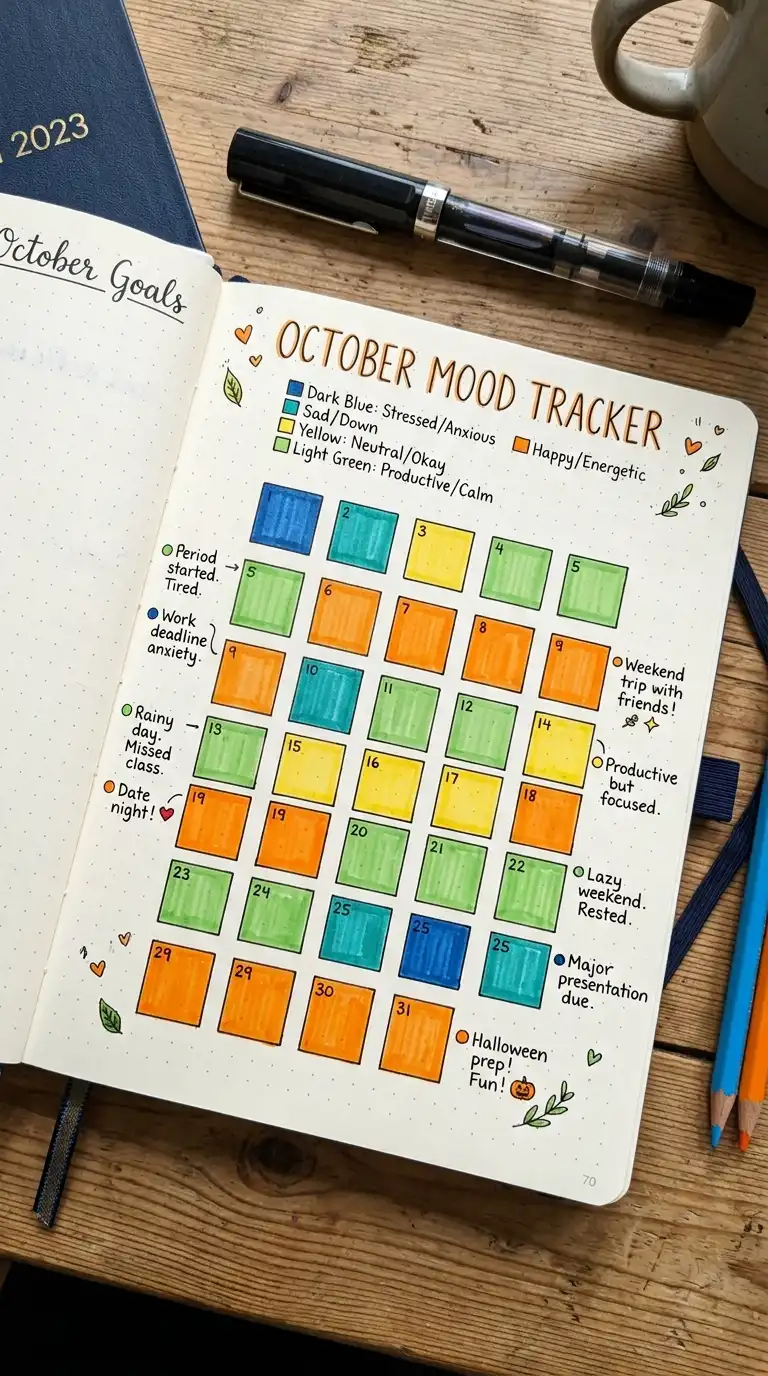
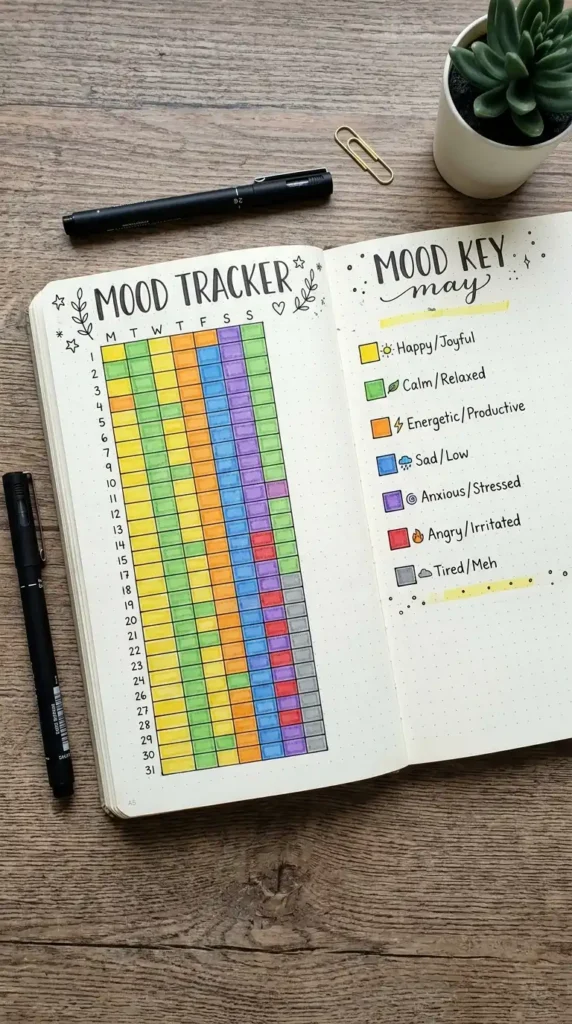
5. The Mood Tracker Page
Your emotional health is just as important as your physical health. A mood tracker page helps you identify patterns in how you feel and what factors influence your daily emotional state.
Create a grid with the days of the month on one axis and emotions or energy levels on the other. Each day, color in the corresponding square based on how you feel. Pair your mood tracker with a short daily note about what contributed to that mood.
QUICK TIPS
- Use a color scale that makes sense to you.
- Review your mood tracker monthly to identify triggers and supports.
- Add a key explaining your color system.
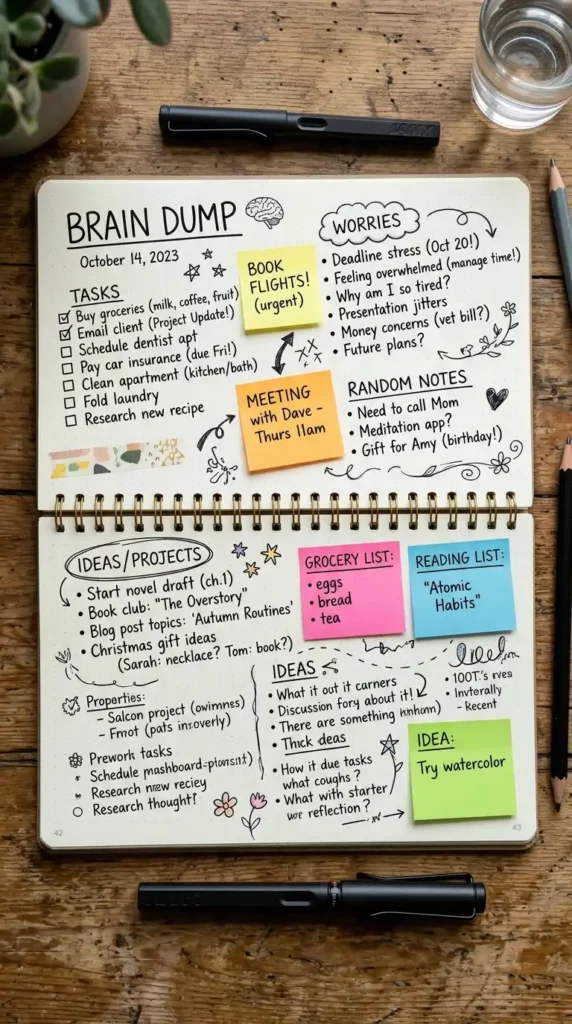
6. The Brain Dump Page
Before you can plan effectively, you need to clear your mental clutter. A brain dump page gives you space to offload everything on your mind—tasks, worries, ideas, and random thoughts.
Set a timer for 10 minutes and write continuously without editing or judging. Include everything that’s occupying your mental space. Once the brain dump is complete, review the items and decide what needs action, what can wait, and what can be let go.
QUICK TIPS
- Use sticky notes so you can move items to other pages.
- Review your brain dump before creating your to-do list.
- Date your brain dump so you can track mental clutter over time.
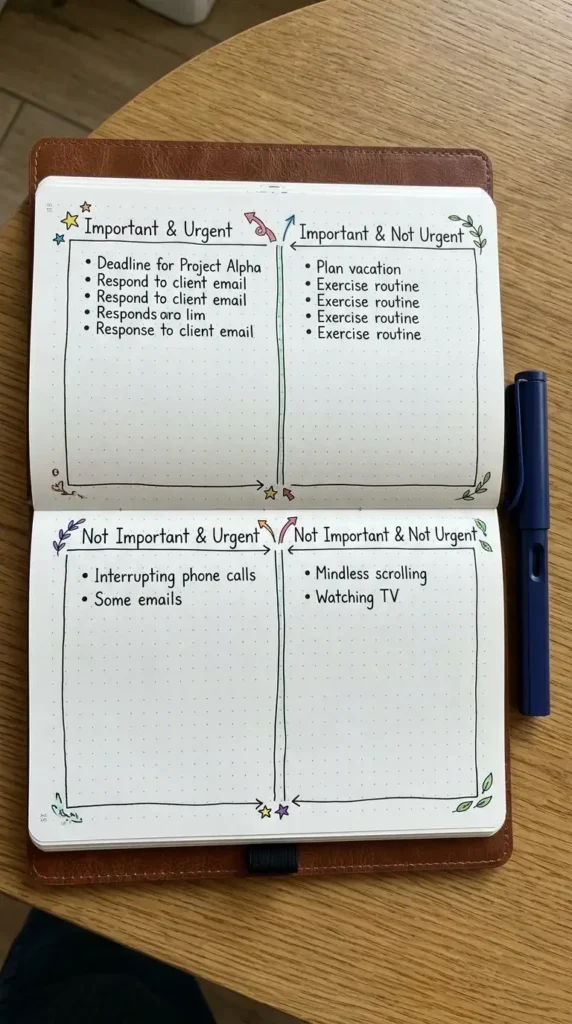
7. The Priority Matrix Page
Once your brain is clear, the priority matrix page helps you sort tasks and goals by urgency and importance. This ensures you focus on what truly matters.
Draw a four-quadrant matrix: Important & Urgent (do now), Important & Not Urgent (schedule), Not Important & Urgent (delegate), and Not Important & Not Urgent (eliminate). Move tasks from your brain dump and to-do list into the appropriate quadrant.
QUICK TIPS
- Review your priority matrix weekly.
- Use different colored pens for different categories.
- Be honest about what’s truly important vs. what’s merely urgent.
8. The Self-Care Page
Self-care isn’t selfish—it’s essential. A self-care page ensures you’re prioritizing your own wellbeing alongside your other responsibilities.
Create a checklist of self-care activities organized by category: Physical (exercise, sleep, healthy meals), Emotional (therapy, journaling, connecting with friends), Social (calling a friend, family time), and Spiritual (meditation, nature walks, reading). Aim to complete at least one activity from each category each week.
QUICK TIPS
- Schedule self-care activities on your calendar.
- Be realistic—small acts of self-care count.
- Review your self-care page monthly to assess balance.

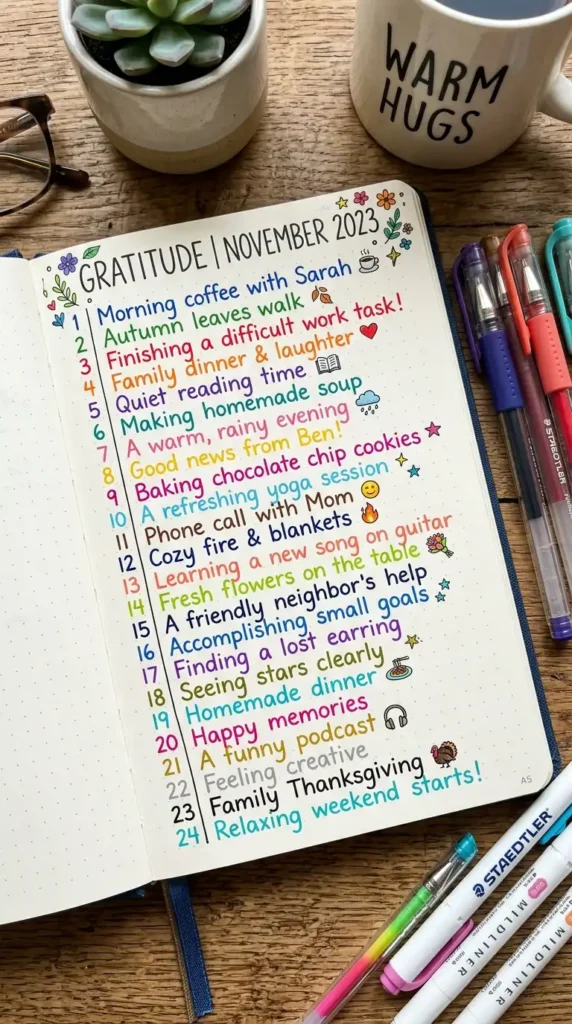
9. The Gratitude Page
Gratitude is one of the most powerful practices for improving mental wellbeing. A gratitude page gives you a dedicated space to record what you’re thankful for each day.
Each day, write one to three things you’re grateful for. They can be as small as a good cup of coffee or as significant as a promotion. The practice of noticing and recording gratitude rewires your brain to focus on the positive.
QUICK TIPS
- Aim for variety—don’t just repeat the same things.
- Be specific rather than general.
- Read back through your gratitude log at month-end to boost your mood.
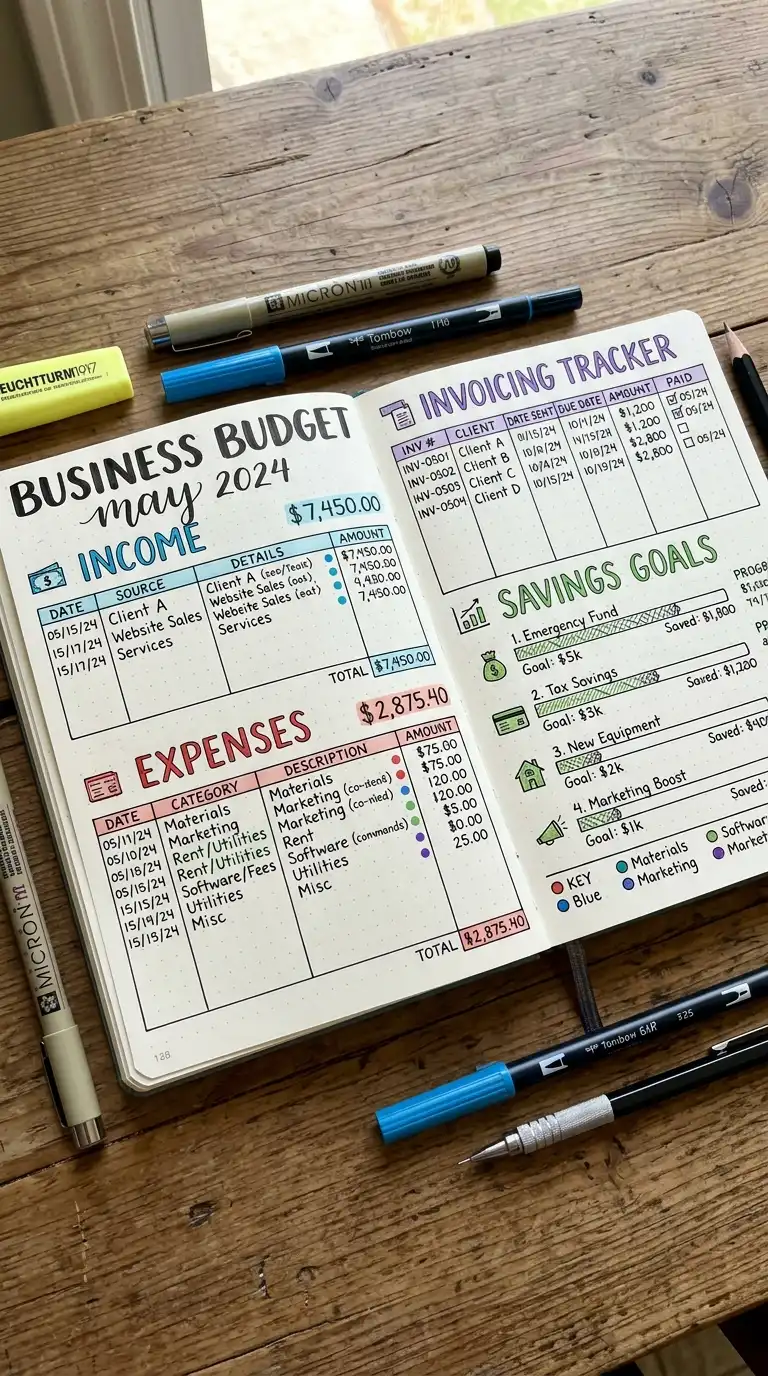
10. The Budget Page
Financial goals require monthly tracking to succeed. A budget page keeps your finances visible and manageable.
Create sections for: Monthly Income, Fixed Expenses, Variable Expenses, and Savings Goals. Track your actual spending against your planned budget weekly. At month-end, summarize where you spent more or less than expected.
QUICK TIPS
- Use a different color for planned vs. actual spending.
- Include a section for irregular expenses.
- Review your budget quarterly to see big-picture trends.

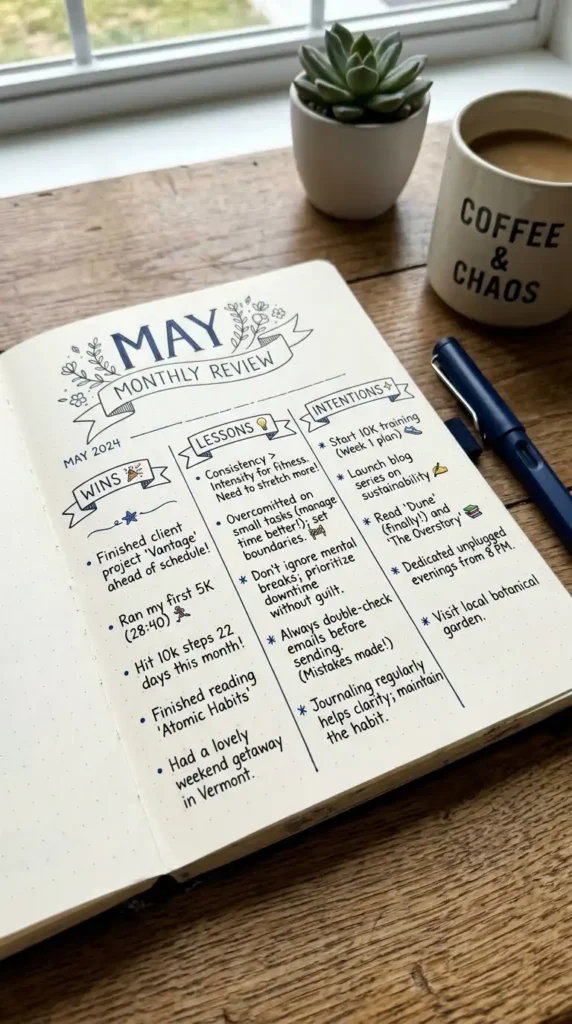
11. The Monthly Review Page
Before you can plan forward, you must reflect backward. A monthly review page helps you learn from the past 30 days and set intentions for the next.
Include sections for: What Went Well (celebrate your wins), What Could Be Improved (honest assessment), Lessons Learned (takeaways), and One Thing I’ll Do Differently Next Month. Complete this page on the last day of the month.
QUICK TIPS
- Be brutally honest in the “What Could Be Improved” section.
- Celebrate even small wins—they build momentum.
- Use this page to inform your goals for the next month.
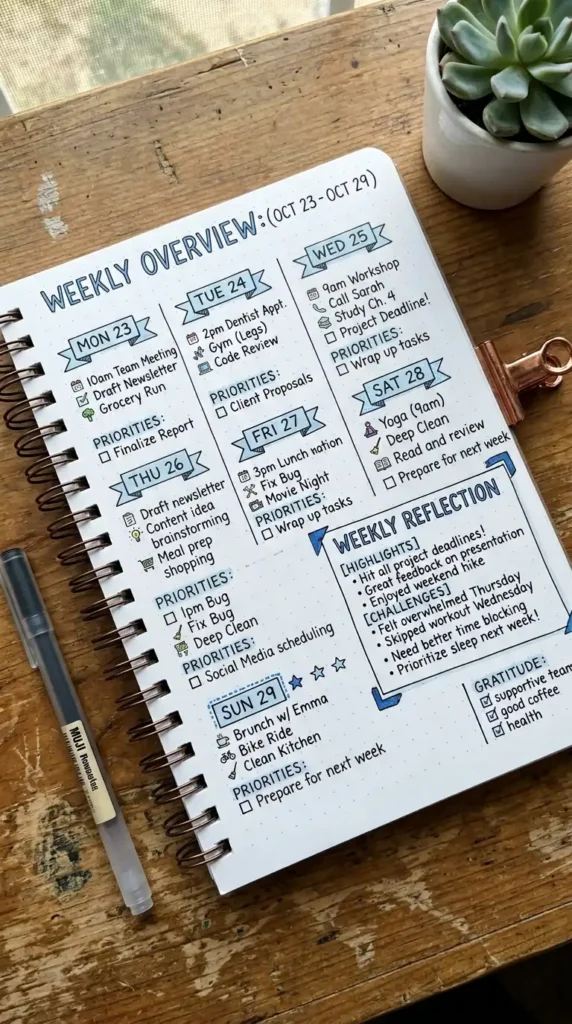
12. The Weekly Overview Pages
Weekly overview pages bridge the gap between monthly planning and daily action. They provide a focused view of what’s ahead each week.
Divide the page into sections for each day of the week. In each section, note key priorities, appointments, and tasks. Add a “weekly focus” line at the top to stay aligned with your monthly goals. Use the bottom of the page for notes or a weekly reflection.
QUICK TIPS
- Keep daily priorities to 3–5 tasks.
- Review your weekly overview each Sunday evening.
- Use the weekly reflection to adjust your monthly plan.
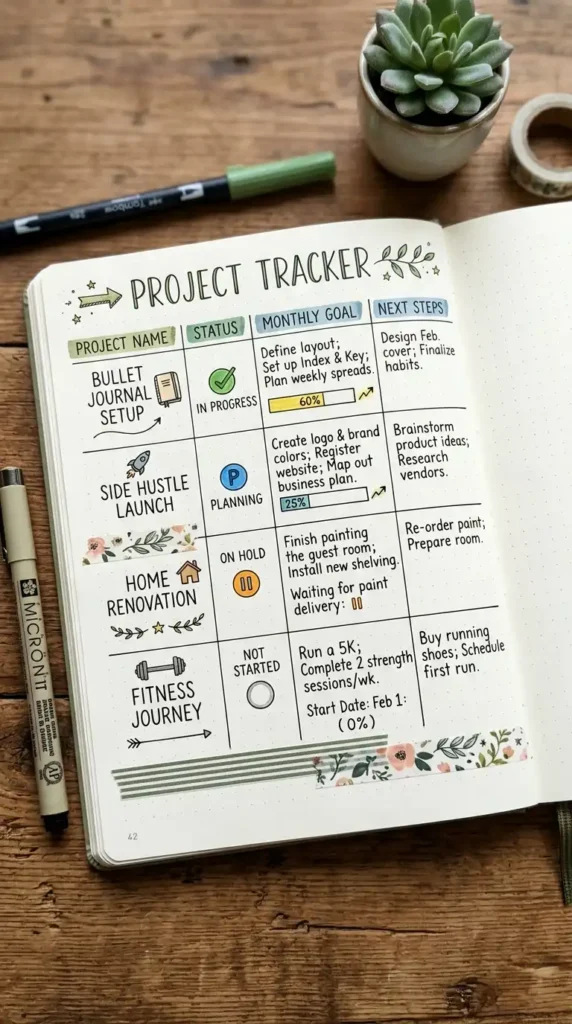
13. The Project Page
Some goals require ongoing attention across multiple months. A project page tracks progress on longer-term initiatives.
List your active projects at the start of the month. For each project, note: current status, this month’s goal, next action step, and any obstacles. At month-end, update each project’s status and move it to next month’s project page if still in progress.
QUICK TIPS
- Limit active projects to 3–5 to avoid spreading yourself too thin.
- Break large projects into monthly milestones.
- Use a symbol system for status updates.
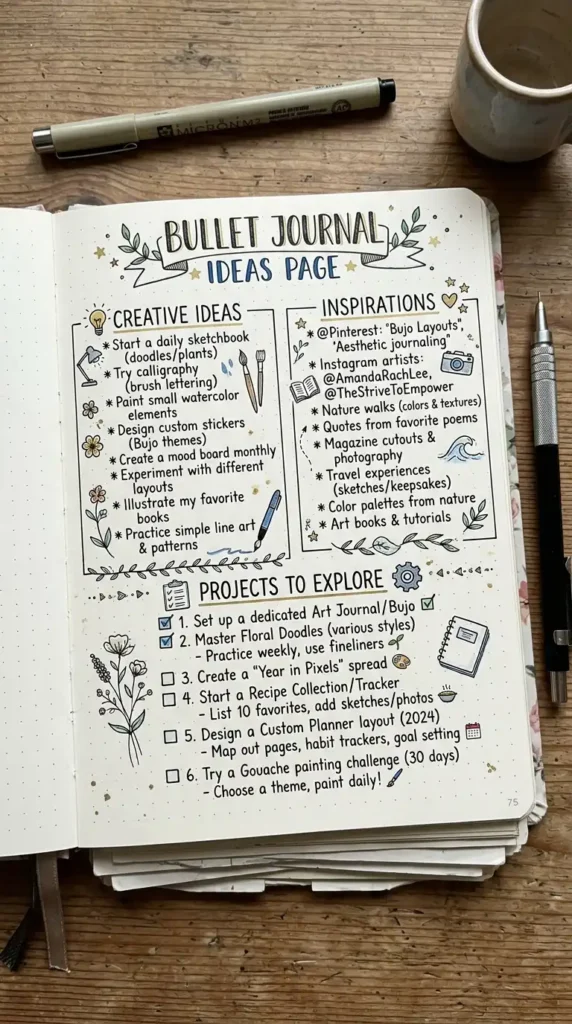
14. The Ideas Page
Creativity needs space to breathe. An ideas page captures inspirations, sparks, and insights that might otherwise be forgotten.
Create sections for: Creative Ideas (any spark that arises), Inspirations (books, art, people, nature that inspired you), and Projects to Explore (ideas worth pursuing). Review your ideas page monthly to find recurring themes or ideas worth developing.
QUICK TIPS
- Write down ideas immediately—even if they seem silly.
- Include visuals: small sketches, magazine clippings, or colored swatches.
- Date your ideas to track when inspiration struck.
15. The Next Month Preview Page
Prepare for the upcoming month with a preview page that builds anticipation and excitement. This helps you transition smoothly from one month to the next.
List upcoming events, deadlines, and commitments for the next month. Note any preparations needed—presents to buy, tasks to complete, or appointments to schedule. Add a “looking forward to” section for things you’re excited about.
QUICK TIPS
- Use this page at the end of the month to start planning ahead.
- Keep it high-level—detailed planning happens next month.
- Make it colorful to generate excitement.

16. The Monthly Quote or Inspiration Page
End your monthly section with a page dedicated to inspiration. This is a space for quotes, affirmations, or images that motivate and encourage you.
Choose a quote that resonates with your monthly theme or goals. Write it in beautiful lettering and add decorative elements that reflect the season or your mood. Some journalers include a small section for “words to live by this month.”
QUICK TIPS
- Change the quote each month to match your focus.
- Use this page as a bookmark to revisit when you need motivation.
- Make it visually beautiful—this page deserves to be seen.

Final Thoughts
Your monthly Bullet Journal section is a reflection of your priorities, your creativity, and your growth. Each page serves a distinct purpose—planning, tracking, reflecting, or inspiring. The beauty of the BuJo system is that you can mix and match these pages to create a monthly section that’s uniquely yours.
Start with the pages that address your most immediate needs. As you develop the habit of journaling, experiment with new pages and layouts. Over time, your monthly section will become a comprehensive system that supports every aspect of your life.
Remember, your Bullet Journal works for you—not the other way around. Let these pages inspire you, adapt them freely, and enjoy the process of creating a system that brings clarity and intention to each month.