14 September Bullet Journal for Schools
September is back-to-school month for students, teachers, and parents. Your Bullet Journal can help you stay organized, focused, and balanced throughout the academic year. Below are 14 school-themed September spread ideas designed for students of all ages.
1. The Class Schedule Page
Create a master page displaying your entire weekly class schedule at a glance. This is your academic foundation for the month.
Draw a weekly grid with time slots and days of the week. Fill in each class with its name, room number, and instructor. Use color coding to distinguish between different subjects. Add a small section for office hours, study group times, and important school announcements.
QUICK TIPS
- Use a different color for each subject.
- Keep this page visible at all times.
- Include building names or campus locations.

2. The Assignment Tracker Page
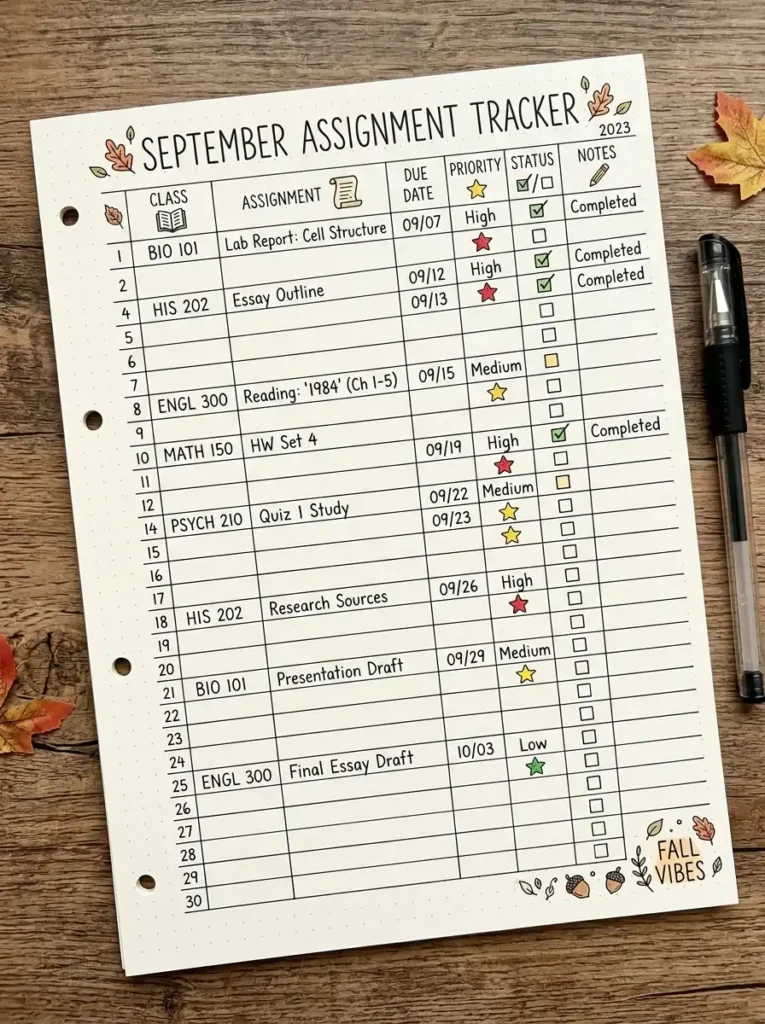
Track all your assignments, deadlines, and projects in one place. This page prevents last-minute panic and ensures nothing falls through the cracks.
Create a table with columns for: Class, Assignment Name, Due Date, Priority Level, Status (Not Started, In Progress, Completed), and Notes. Sort assignments by due date. Add a star or highlight for major exams or projects worth significant points.
QUICK TIPS
- Update your assignment tracker weekly.
- Use a symbol system for priority levels.
- Check off completed assignments to build momentum.
3. The Exam Study Schedule Page
For exam periods, create a dedicated page that maps out your study plan. This helps you cover all material without cramming.
List each exam and its date. Work backward from each exam to create a study timeline. Divide material into manageable chunks and assign them to specific days. Include sections for review days and practice exams.
QUICK TIPS
- Study for 30-45 minutes with short breaks.
- Prioritize exams that are earlier or weighted more heavily.
- Add a self-care reminder section.

4. The Grade Tracker Page
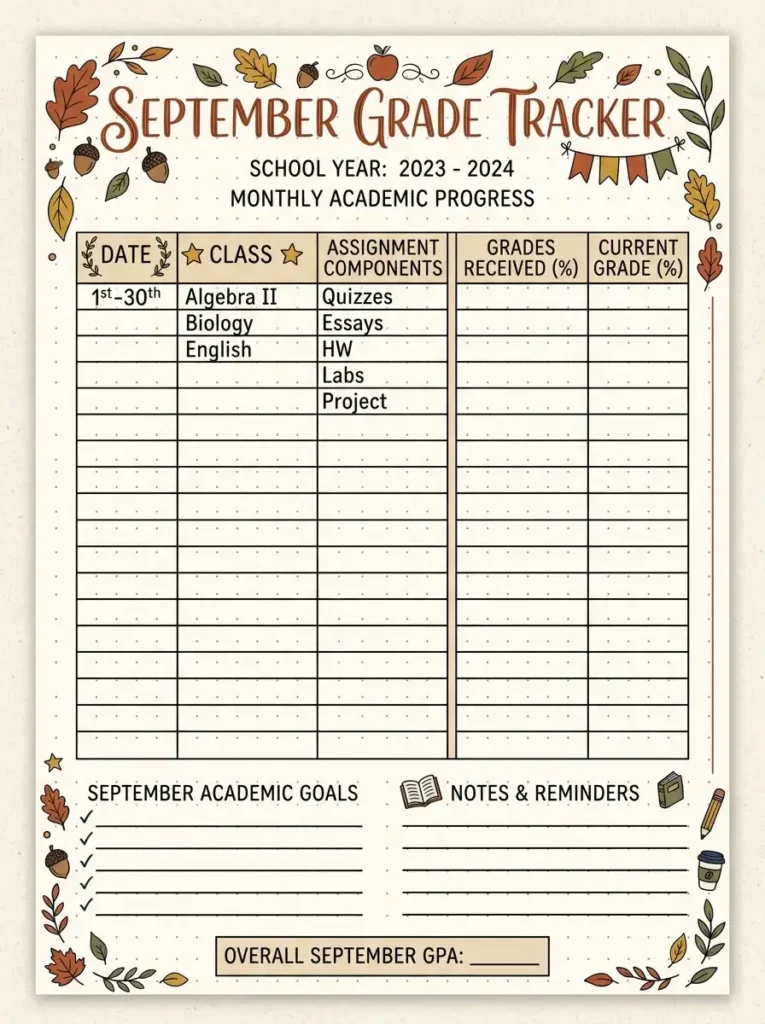
Monitor your academic progress with a grade tracker page. This gives you a clear picture of how you’re performing in each class.
List your classes and the components that make up your grade (homework, quizzes, exams, projects, participation). Record your grades for each component as they come in. Calculate your current grade and what you need to achieve your target.
QUICK TIPS
- Update this page whenever you receive a graded assignment.
- Use a color scale to quickly see areas of strength and weakness.
- Calculate your running GPA at the end of each month.
5. The Teacher Contact Page
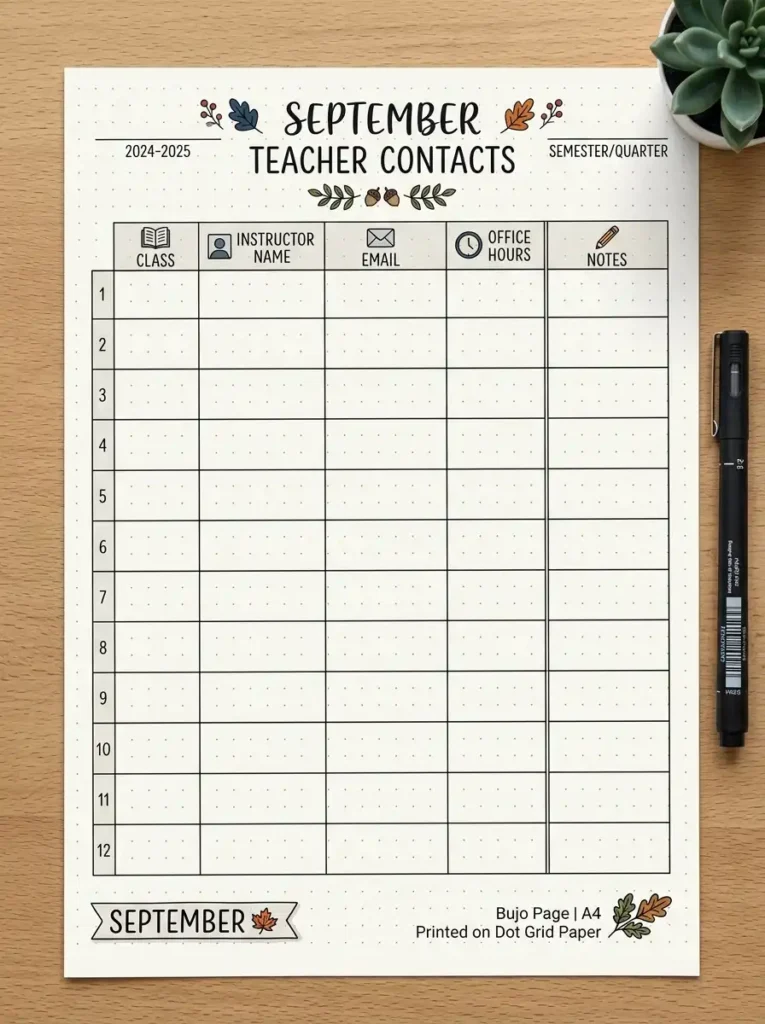
Keep all important academic contacts in one place. This page becomes your go-to resource for questions and support.
List each class with the instructor’s name, email address, office location, and office hours. Add a section for teaching assistants, academic advisors, and tutors. Include a note about preferred communication methods and response times.
QUICK TIPS
- Add contact details as soon as you get your syllabus.
- Note any special instructions for emailing each instructor.
- Keep this page updated throughout the semester.
6. The Weekly Study Plan Page
Break down your monthly goals into weekly study plans. This bridges the gap between monthly overview and daily action.
Divide the page into sections for each day of the week. In each section, list: Subjects to Study, Assignments to Work On, Reading to Complete, and Review Sessions. Add a weekly goals box for overarching objectives.
QUICK TIPS
- Plan your study schedule around your natural energy peaks.
- Include time for breaks and social activities.
- Review and adjust your weekly plan every Sunday.

7. The Reading Log Page
Track your required and optional readings for the month. This helps you stay on top of the reading load for each class.
List each class and its assigned readings for the month. For each reading, note: Title, Pages, Due Date, and Status (Not Started, In Progress, Completed). Add a section for additional readings or articles you want to explore.
QUICK TIPS
- Break long readings into daily segments.
- Add a section for notes or key takeaways.
- Use different colors for different classes.

8. The Group Project Planning Page
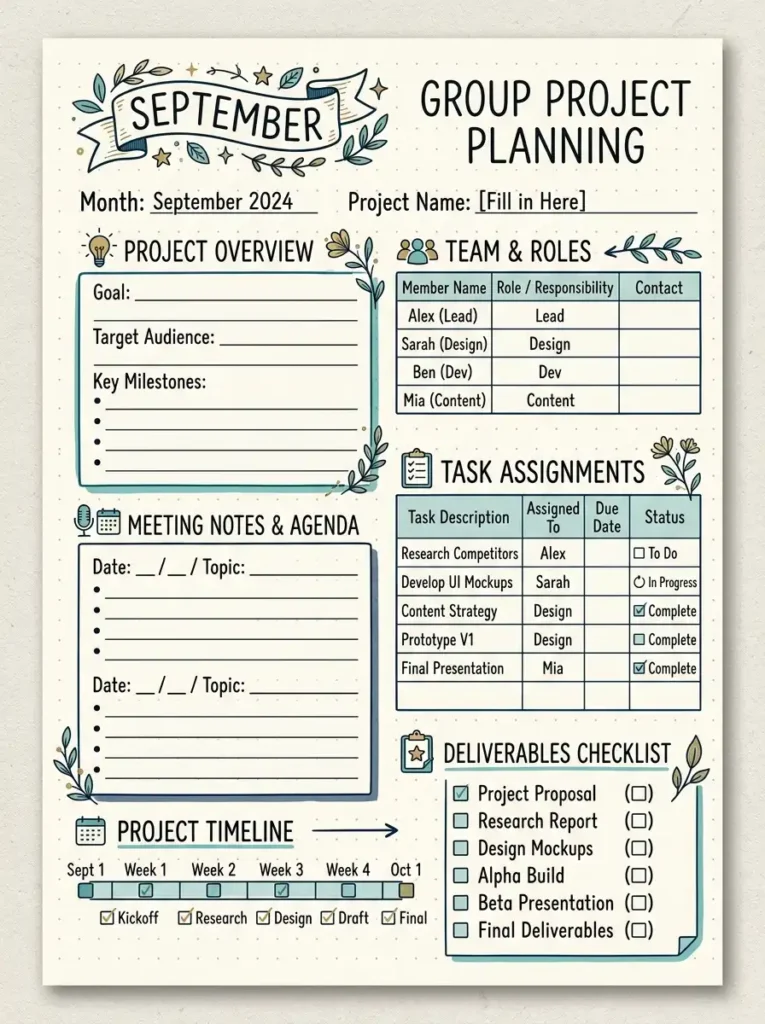
Group projects require extra coordination. A dedicated page helps you manage deadlines, tasks, and communication.
Create sections for: Project Overview (topic, goals, deadlines), Group Members (names and contact info), Task Assignment (who is doing what and when), Meeting Notes (dates, decisions, action items), and Deliverables Checklist.
QUICK TIPS
- Schedule regular check-ins with your group.
- Keep a record of all communication for accountability.
- Celebrate group wins and milestones.
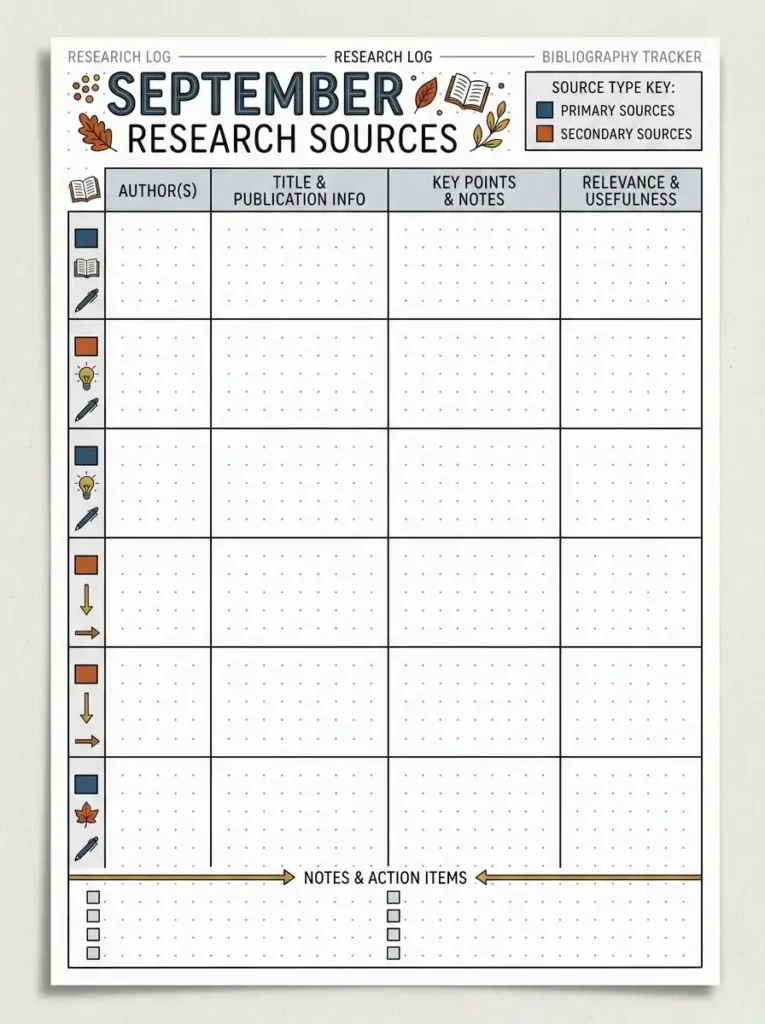
9. The Research & Sources Page
For research papers and projects, create a page to organize your sources and research notes. This makes citations and writing much easier.
List each source with: Author, Title, Publication Date, Key Points, and Relevance to Your Topic. Use a color code for primary vs. secondary sources. Add a section for citation notes (APA, MLA, Chicago, etc.).
QUICK TIPS
- Record source details as soon as you find them.
- Use a notation system to track which sources you’ve read.
- Keep a running bibliography on this page.
10. The Academic Goal Setting Page
Set academic goals for the month and the semester. This page keeps you focused on what you want to achieve academically.
Divide goals by class or by skill area. Use sections for: Grade Goals (what you want to achieve in each class), Skill Goals (what you want to learn or improve), and Habit Goals (study habits you want to develop). Include a section for semester-long aspirations.
QUICK TIPS
- Use the SMART framework for goal setting.
- Break semester goals into monthly and weekly action steps.
- Review your academic goals regularly.

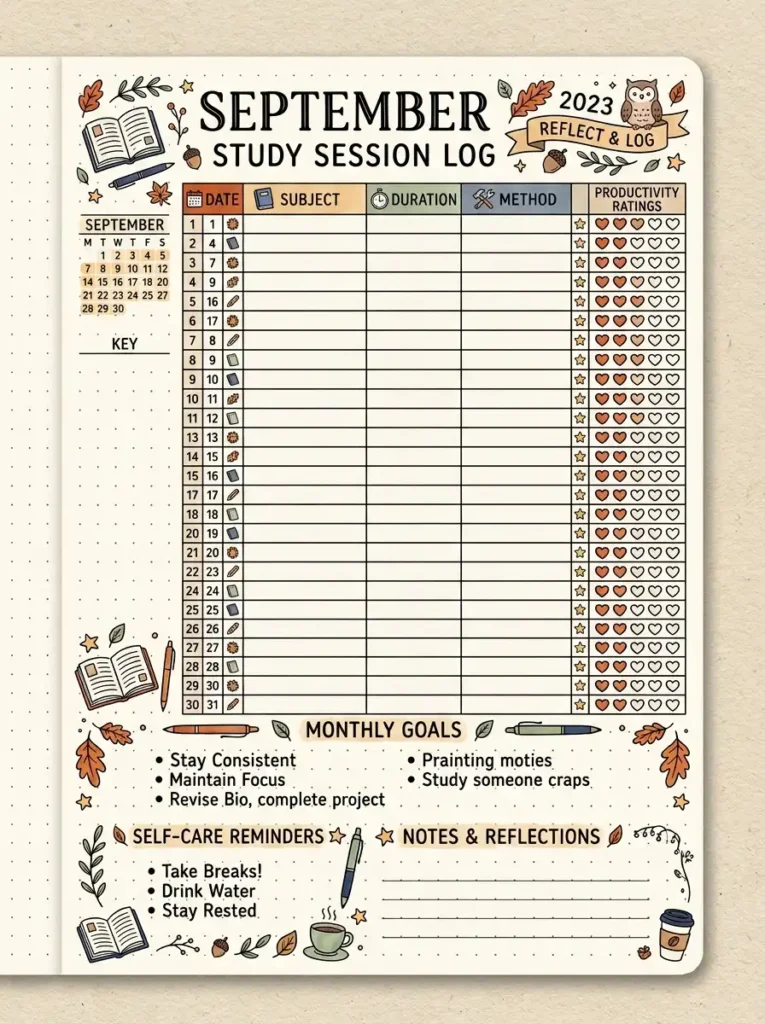
11. The Study Session Log Page
Track your study sessions to understand your study habits and productivity patterns. This helps you optimize your study time.
Create a log with columns for: Date, Subject Studied, Duration, Study Method (reading, practice problems, flashcards), Distractions Noted, and Productivity Rating. Review the log to see when and how you study best.
QUICK TIPS
- Be honest about distractions to identify patterns.
- Try different study methods and note which work best.
- Use the log to plan future study sessions.
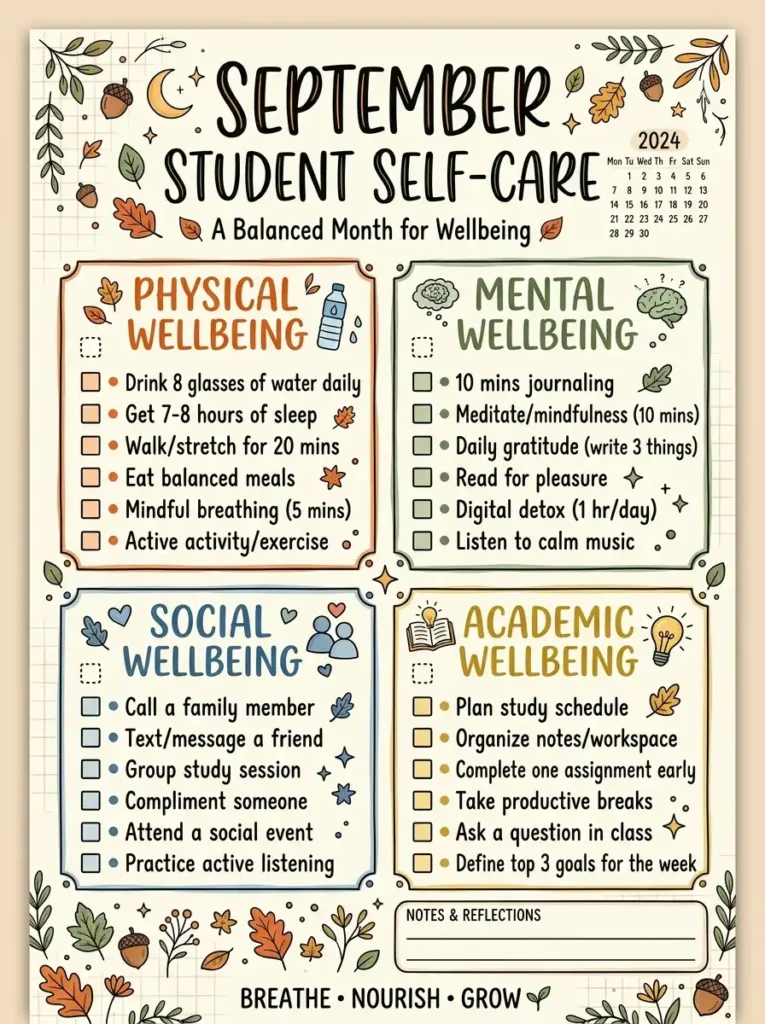
12. The Self-Care for Students Page
School can be stressful. A dedicated self-care page helps you maintain wellbeing alongside your academic responsibilities.
Create sections for: Physical Self-Care (sleep, exercise, meals), Mental Self-Care (study breaks, mindfulness), Social Self-Care (friends, family), and Academic Self-Care (celebrating wins, manageable goals). Each week, check off at least one activity from each section.
QUICK TIPS
- Schedule self-care activities like appointments.
- Include a section for stress management techniques.
- Review your self-care page weekly.
13. The Campus Resources Page
Know what resources are available on campus. This page helps you access support when you need it.
List resources like: Library Services (hours, research help, study rooms), Writing Center (appointments, services), Tutoring Center (subjects, schedule), Health Services (appointments, hours), Counseling Center (contacts, services), and Career Services (hours, appointments).
QUICK TIPS
- Add these contact details at the start of the semester.
- Note any virtual or online services available.
- Include a section for student discounts and perks.

14. The Monthly Academic Reflection Page
Close your month with a reflection on your academic journey. This page helps you learn from your experiences and improve.
Create sections for: Academic Wins (successes this month), Challenges (difficulties you faced), Lessons Learned (what you discovered), Subjects Needing More Time, and Next Month’s Academic Intentions. Write reflectively—this is your learning closure ritual.
QUICK TIPS
- Write this page on the last school day of the month.
- Be honest about challenges—they’re opportunities to grow.
- Use this reflection to adjust your goals and habits.

Final Thoughts
September is the start of a new academic journey. Your Bullet Journal can be a trusted companion—helping you stay organized, focused, and balanced throughout the school year. These pages are designed to support your academic success while honoring your wellbeing.
Start with the pages that address your most immediate needs. As you develop the habit of journaling for school, add more pages to create a comprehensive academic system. Remember that your BuJo is flexible—adapt these ideas to fit your courses, schedule, and learning style. Your academic success depends on planning, perseverance, and self-care. Let your Bullet Journal be the tool that brings all three together.