12 Bullet Journal Monthly Spread Flower Ideas
Flowers bring beauty, color, and a sense of growth to your Bullet Journal monthly spreads. Whether you’re a seasoned artist or a beginner, floral themes are accessible, versatile, and always in season. Below are 12 flower-inspired monthly spread ideas that will make your BuJo bloom.
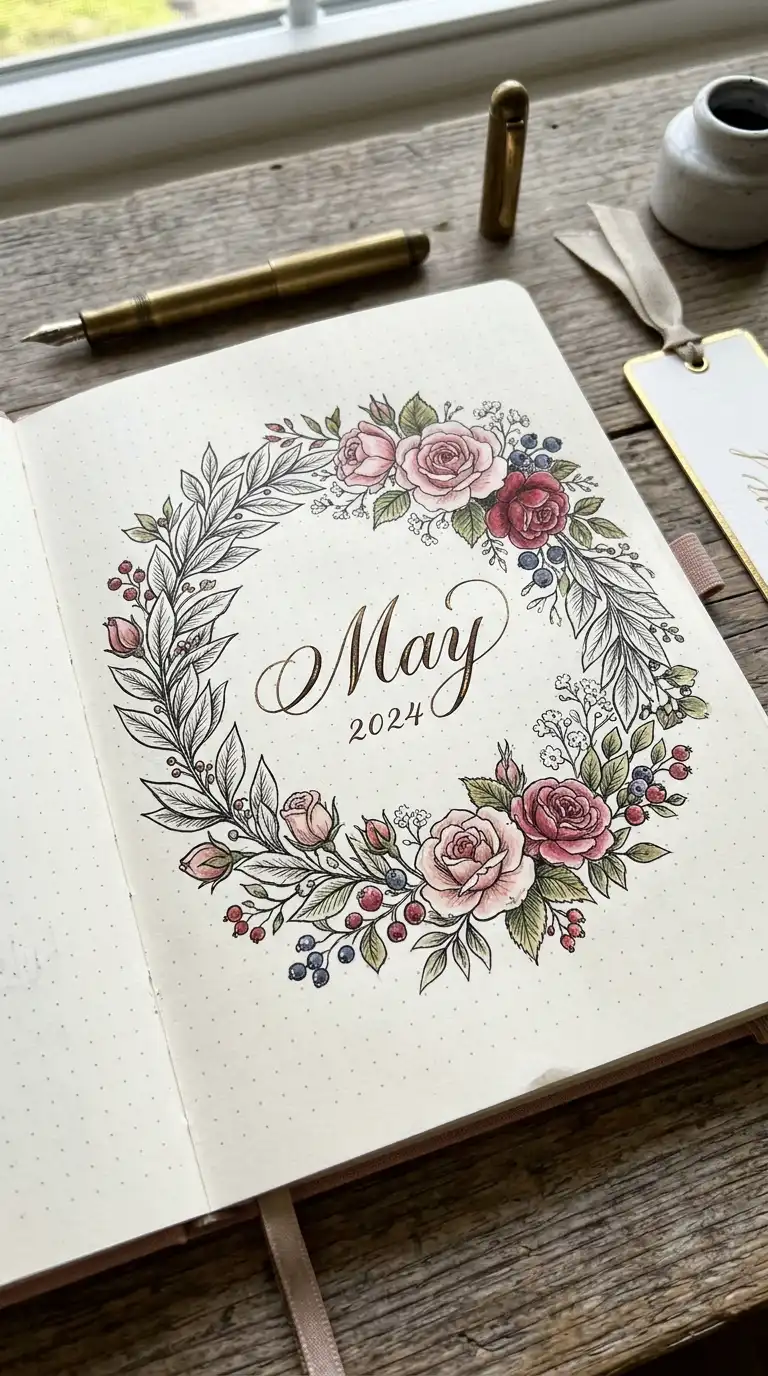
1. The Floral Cover Page with Wreath
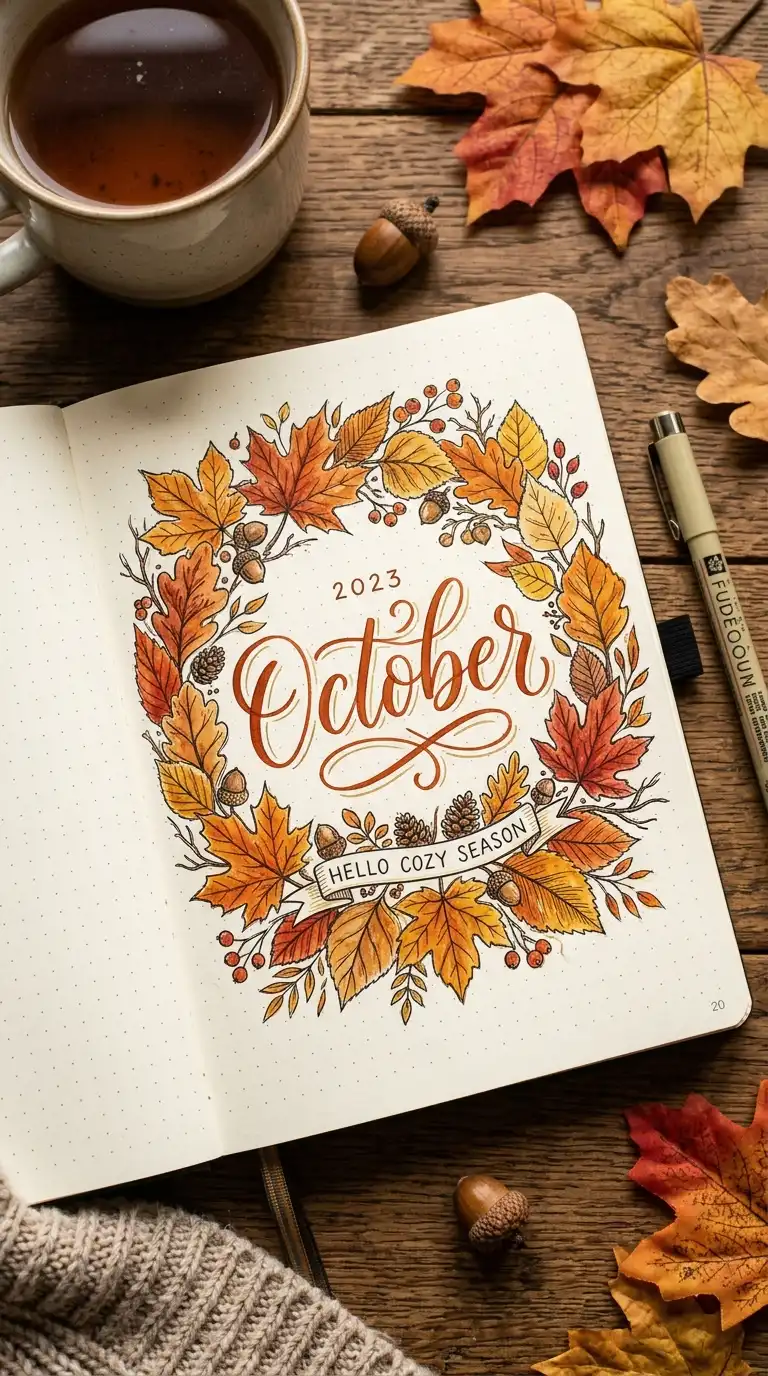
Start your month with a stunning cover page featuring a hand-drawn floral wreath. This classic design creates an elegant entry point to your monthly spreads and sets a botanical tone for the pages ahead.
Draw a circular wreath using leaves, vines, and small blooms, leaving the center space for the month name or number. The wreath can be simple (a few stylized leaves forming a circle) or elaborate (filled with varied flowers and detailed foliage). Finish by writing the month name in the center in elegant script or bold block letters.
QUICK TIPS
- Start with a faint pencil circle as a guide.
- Draw leaves and flowers in pairs for a balanced look.
- Add small berries or buds for extra detail and color.
2. The Monthly Calendar with Flower Border
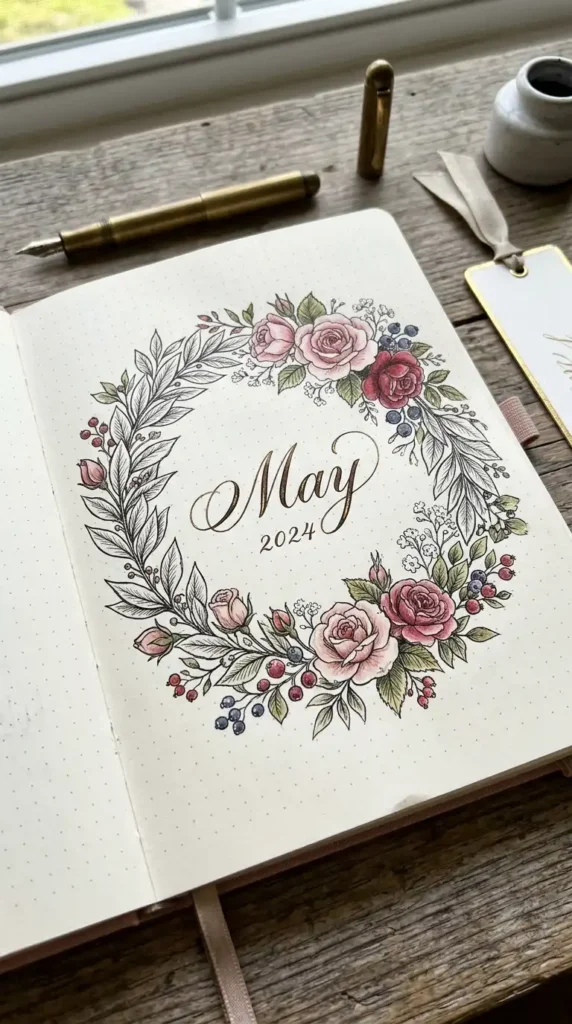
Transform your monthly calendar grid by framing it with a delicate flower border. This adds visual interest to a practical spread without overwhelming the functionality.
Draw the calendar grid in the center of the page. Around the edges, create a border of small flowers, leaves, or vines. The border can be continuous or broken into corner designs. Choose flowers that match the season—daisies for spring, sunflowers for summer, chrysanthemums for autumn, or snowdrops for winter.
QUICK TIPS
- Keep the border thin to preserve space for calendar entries.
- Use a single color for a cohesive look or multiple colors for vibrancy.
- Add small flower symbols next to special dates for extra charm.
3. The Habit Tracker with Blooming Flowers
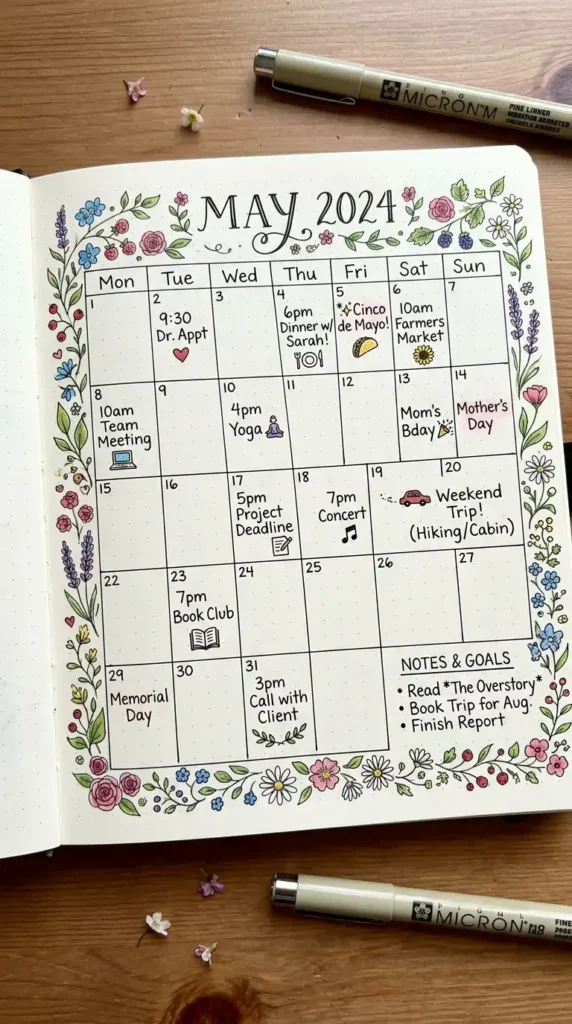
Track your daily habits with a visual twist—each completed habit helps a flower “bloom.” This creative approach makes habit tracking more engaging and rewarding.
Create a grid with your habits down the side and days across the top. Instead of simple checkboxes, draw a small flower bud in each square. As you complete a habit, color in or draw the flower in full bloom. By month’s end, you’ll have a garden of completed habits that visually represents your consistency.
QUICK TIPS
- Use different flower colors for different habits.
- Add a small key explaining your color system.
- Review your blooming tracker weekly to stay motivated.

4. The Mood Tracker as a Flower Garden
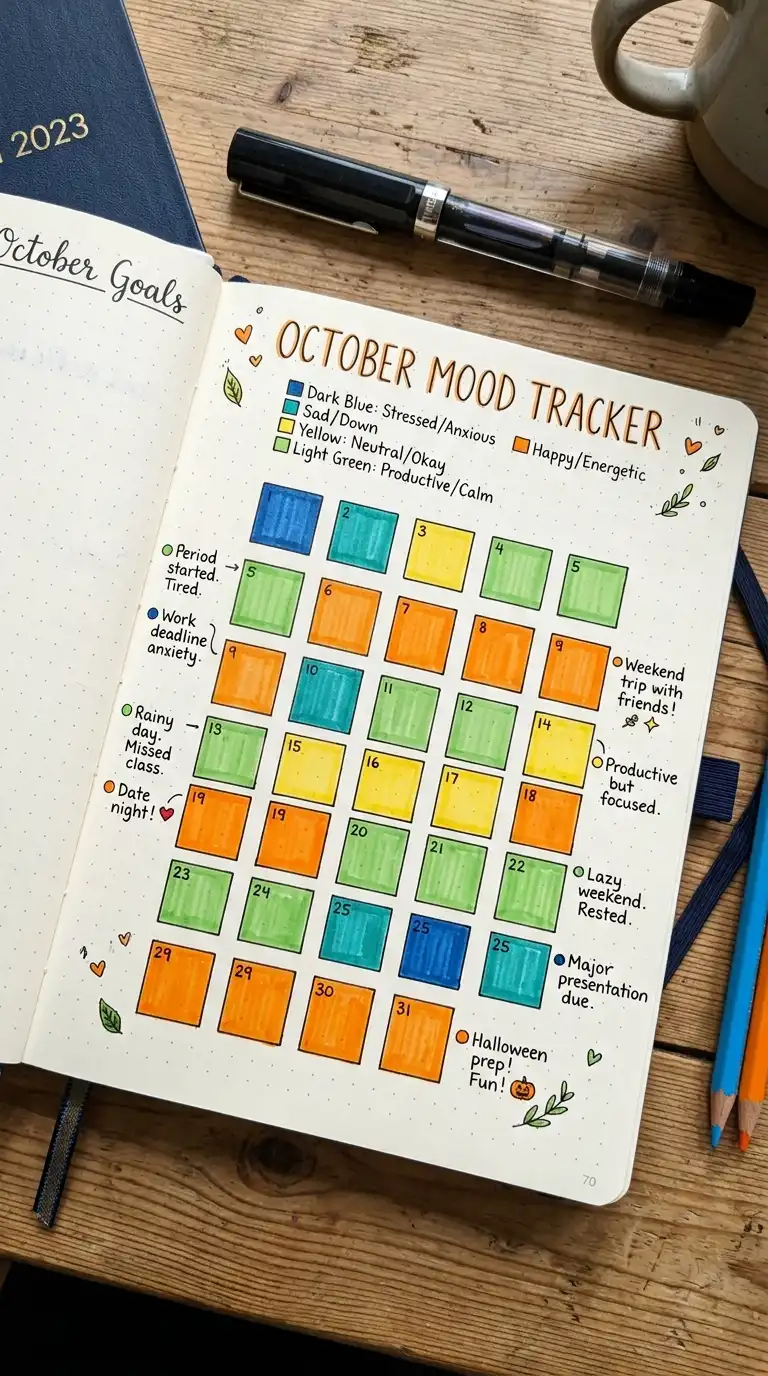
Track your daily emotions by creating a flower garden where each bloom represents a day’s mood. This artistic approach turns emotional tracking into a beautiful visual display.
Draw 30 or 31 flower stems on your page, one for each day of the month. Each day, color or draw the flower head in a color that represents your mood—bright colors for happy days, muted tones for neutral, darker shades for challenging days. By month’s end, you’ll have a blooming garden that tells the story of your emotional journey.
QUICK TIPS
- Choose a color palette that intuitively represents different moods.
- Add leaves or stems as you track additional metrics (energy, anxiety, etc.).
- Include a small key explaining your color-mood associations.

5. The Goal Setting Spread with Growth Motif
Set your monthly goals within a spread that emphasizes growth—just like flowers reaching toward the sun. This theme reinforces the idea that goals take time and nurturing to achieve.
Divide your page into sections representing different areas of your life (Career, Health, Relationships, Personal Growth). Frame each section with small floral elements or vine-like borders. Draw a small flower next to each goal and color it in as you make progress, symbolizing growth toward completion.
QUICK TIPS
- Use the metaphor of watering and sunlight to represent daily actions.
- Include a “garden notes” section for reflections on your progress.
- Draw roots beneath your goals to represent foundational habits.

6. The Weekly Overview with Pressed Flowers
For a truly unique and personal touch, incorporate real pressed flowers into your weekly overview pages. This connects your planning practice with nature and creates a beautiful, tactile experience.
Pick small flowers or leaves from your garden or walks, press them between the pages of a heavy book for a week, then carefully glue them into your journal. Arrange them around your weekly layout or use them as decorative accents. The natural colors and textures add an authentic botanical feel that can’t be replicated with pens alone.
QUICK TIPS
- Use flowers that are naturally small and thin for best results.
- Allow pressed flowers to dry completely before gluing.
- Apply a thin layer of clear glue or Mod Podge to preserve them.

7. The Gratitude Log with Flower Illustrations
Combine gratitude practice with floral illustrations for a spread that’s both meaningful and beautiful. Each grateful entry becomes part of a growing garden.
Draw a simple flower for each day of the month, with the flower head serving as space for your gratitude entry. You might write a brief statement inside the flower or beneath it. As you fill in each day’s flower, your page becomes a blooming garden of thankfulness that you can revisit for a mood boost.
QUICK TIPS
- Draw a different flower variety each day for visual variety.
- Use color to make each entry feel special and distinct.
- Include leaves where you can write small details or specific thanks.
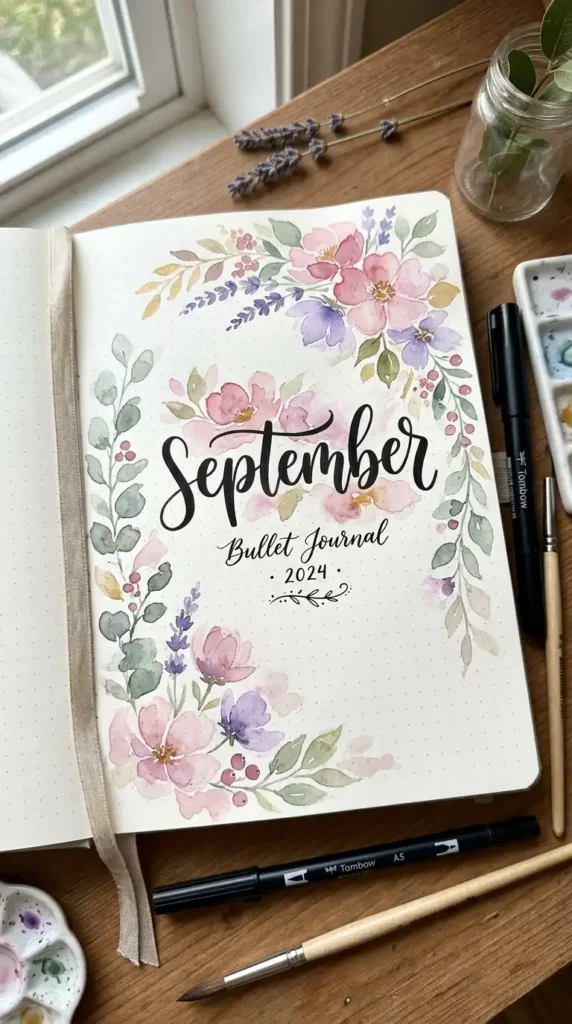
8. The Watercolor Flower Cover Page
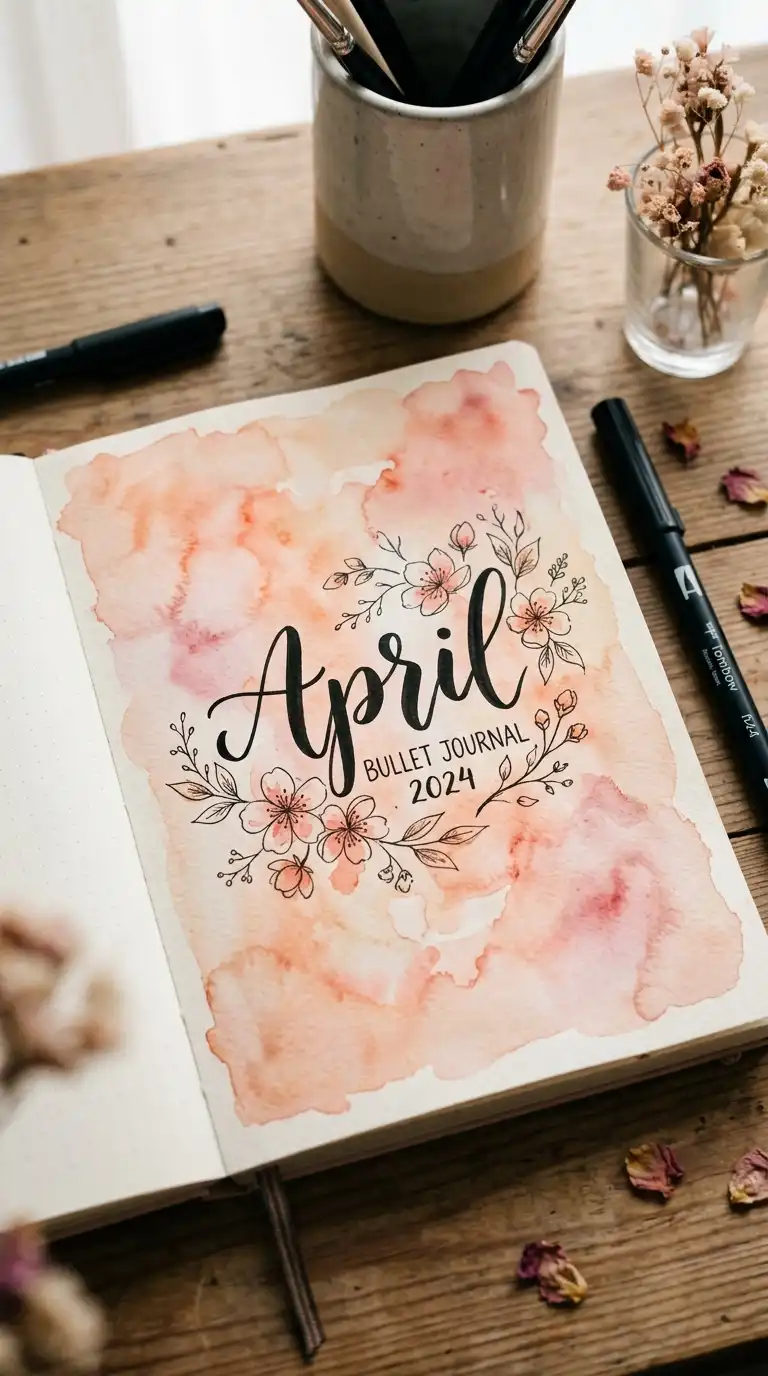
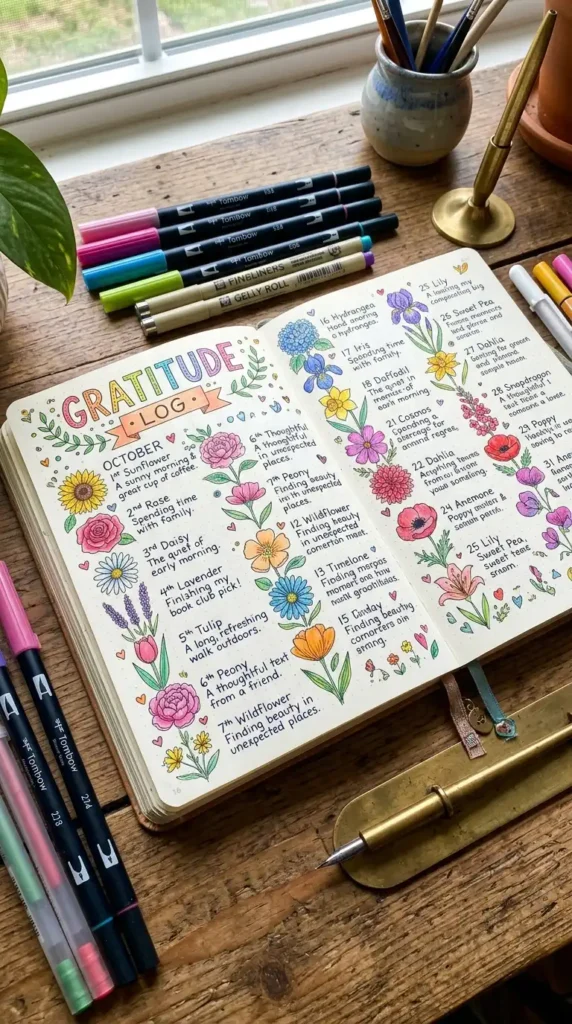
Watercolor flowers create soft, dreamy cover pages that set a gentle, artistic tone for the month. Even simple washes and loose shapes can produce stunning results.
Paint loose watercolor flowers on your page using diluted pigments. Allow the colors to blend and bleed naturally for an organic, artistic look. Once dry, write the month name in bold ink over the watercolor. The contrast between the soft flowers and crisp text creates a professional, polished appearance.
QUICK TIPS
- Use a fine-tipped brush for details and a broad brush for washes.
- Start with lighter colors and build to darker shades.
- Let each layer dry before adding the next to avoid muddy colors.
9. The Floral Month-at-a-Glance
Create a single-page overview of your month with flowers marking important dates. This combines the functionality of a calendar with the beauty of a botanical illustration.
Draw a simple vertical or horizontal timeline with the dates of the month. At each significant date, draw a small flower to mark the event—a rose for a birthday, a daisy for a social event, a tulip for a deadline. The flowers act as visual cues that make important dates easy to spot at a glance.
QUICK TIPS
- Create a key explaining which flower represents which type of event.
- Use different colors to differentiate between personal and professional events.
- Keep the timeline simple so flowers remain the focus.

10. The Self-Care Garden Spread
Your monthly self-care tracker becomes a flourishing garden where each activity helps you grow. This spread makes self-care visual, rewarding, and beautiful.
Draw a garden scene with sections for different self-care categories—Physical (exercise, sleep, meals), Emotional (journaling, therapy, meditation), Social (friends, family, connection), and Creative (art, music, hobbies). In each section, draw flowers that represent your self-care activities. Complete a flower each time you practice self-care, watching your garden grow throughout the month.
QUICK TIPS
- Add a “watering” or “sunlight” element to represent frequency.
- Use color to track which categories you’re focusing on.
- Review your garden weekly to ensure balance across categories.

11. The Floral Brain Dump & Priority Matrix
Clear your mind with a floral-themed brain dump and priority matrix. The botanical elements add calmness to what can be a chaotic thinking process.
On one page, create a brain dump section surrounded by loose flower sketches—let your thoughts flow as freely as the flowers. On the facing page, create a four-quadrant priority matrix with floral corner accents. The calming botanical imagery helps reduce the stress of decision-making and prioritization.
QUICK TIPS
- Use vine-like doodles to connect related thoughts in your brain dump.
- Add a small flower to each quadrant for visual balance.
- Keep the floral elements light so they don’t distract from the content.

12. The Floral Reflections & Intentions Spread
Close your month with a reflections and intentions spread framed by beautiful flowers. This spread becomes a keepsake you’ll treasure when looking back on your year.
Draw a floral garland or bouquet at the top of the page. Below it, create sections for: Proudest Moment, Biggest Challenge, Lesson Learned, What I’m Letting Go, and Next Month’s Intention. Each section can be separated by small floral divider lines or corner flowers. The botanical theme reminds you that growth comes from both sunshine and rain.
QUICK TIPS
- Use dried flowers as actual decorations for this special spread.
- Take time to write reflectively—this is your closing ritual.
- Read back through your floral reflections throughout the year for encouragement.

Final Thoughts
Flowers in your Bullet Journal are more than decoration—they represent growth, change, and the beauty of small daily efforts. Each bloom you draw, color, or press is a reminder that progress takes time and nurturing, just like a garden.
Start with one or two floral spreads this month. As you become more comfortable, expand your botanical collection. Whether you prefer intricate illustrations or simple flower symbols, let your monthly pages bloom with color, creativity, and intention. Your Bullet Journal is your garden—tend it well, and watch it grow.